
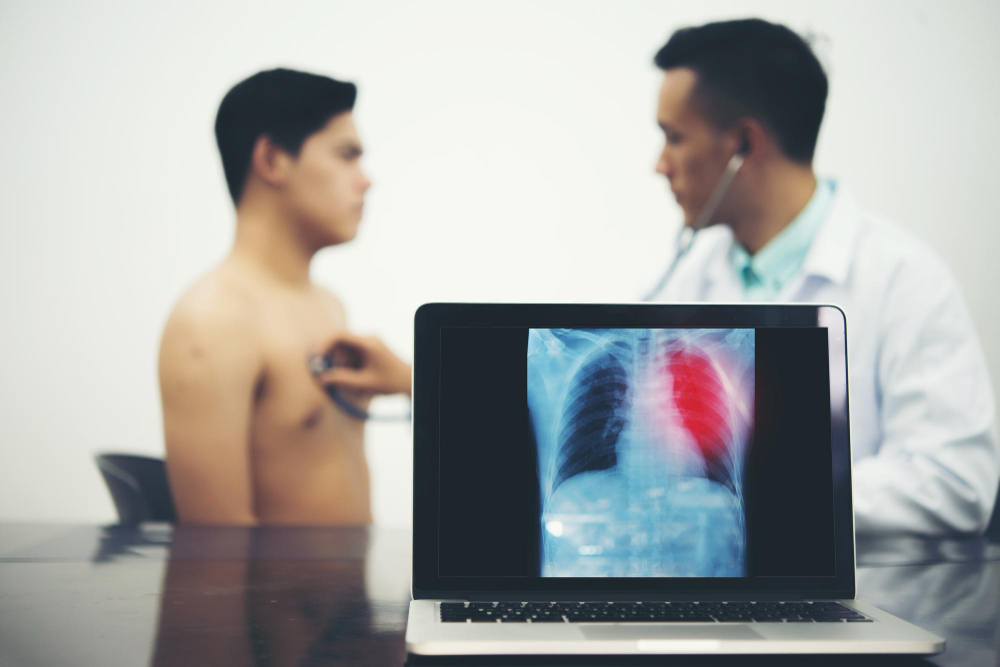
What Is a Chest CT Scan?
A chest CT scan is a special imaging test that takes detailed pictures of your chest. Doctors use this test to look at your lungs, heart, and other parts inside your chest. Sometimes, you may hear it called a CT scan of the chest, computed tomography chest scan, or chest imaging test. Unlike a regular X-ray, a chest CT scan gives clearer and more detailed images. Because of this, it helps doctors find problems that may not show up on standard X-rays.
Why Is a Chest CT Scan Done?
Doctors order a chest CT scan for many reasons. For example, it helps them:
In addition, a chest CT scan can help monitor changes in your lungs over time. If you have ongoing symptoms, your doctor may use this test to track your health.
How Does a Chest CT Scan Work?
A chest CT scan uses a machine that looks like a big ring or donut. You lie on a table that slides through the center of the machine. As you move through, the scanner takes many X-ray pictures from different angles. Then, a computer puts these images together to make detailed cross-section pictures of your chest. Because of this, doctors can see your organs and tissues more clearly than with regular X-rays.
What to Expect During the Procedure
Before the scan, a staff member will explain the steps to you. Usually, you will:
Sometimes, you may need a contrast dye to help certain areas show up better. If so, a nurse will give it through a small needle in your arm. During the scan, you must stay very still. The staff may ask you to hold your breath for a few seconds. The scan itself usually takes less than 10 minutes. Afterward, you can go home and return to your normal activities.
Preparation Tips for a Chest CT Scan
Getting ready for a chest CT scan is simple. However, you should follow these tips:
By following these steps, you can help make sure your scan goes smoothly.
Risks and Safety Considerations
For most people, a chest CT scan is safe. However, like any test using X-rays, there is a small amount of radiation. The amount is higher than a regular chest X-ray, but doctors only order this test when needed. In rare cases, some people may have an allergic reaction to the contrast dye. Signs of a reaction include itching, rash, or trouble breathing. If you have kidney problems, let your doctor know before the scan. The dye can sometimes affect kidney function. Overall, the benefits of finding or ruling out serious problems usually outweigh the risks.
Interpreting Results: What Do They Mean?
After your chest CT scan, a doctor called a radiologist will look at your images. They will write a report and send it to your healthcare provider. Your doctor will then explain what the results mean for you. Sometimes, the scan finds normal results, and no further action is needed. Other times, it may show signs of infection, injury, or growths that need more tests or treatment. If you have questions about your results, ask your doctor to explain them in simple terms.
Frequently Asked Questions
Conclusion
In summary, a chest CT scan is a helpful test that gives doctors clear pictures of your chest. It helps find and treat many health problems. If you have questions or concerns, consult Dr. Praveen Kumar for personalized advice about chest CT scans.